Process Safety Management Program

The major objective of process safety management (PSM) of highly hazardous chemicals is to prevent unwanted releases of hazardous chemicals. An effective process safety management program requires a systematic approach to evaluating the whole chemical process.

Industrial Consultants provides customized Process Safety Management consultation, development and training services that will help you stay compliant within all 14 elements of PSM.

Get A Free Consultation

Hazmat Ammonia First Responders

Why Choose Industrial Consultants?

Industrial Consultants, LLC has trained over 90,000 company employees and firefighters over the past 30 years. When our instructors come to the facility, they bring years of real-world experience and knowledge with them. This translates into a better training experience for the participants and a better value for the money invested. Our class meets and exceeds the demands of the OSHA regulation, and assists our clients in demonstrating their commitment to the safety and health of their employees.

Emergency Responder Training

Many companies house hazardous substances, such as anhydrous ammonia, at their facilities to help in processing, production, and storage of their products. Therefore, it is necessary to have training that teaches prompt and safe responses to hazardous situations, so lives are not endangered and the financial loss for the company is minimized.

Industrial Consultants, LLC offers this class on-site at the facility providing the client site-specific training using their own equipment.  On-site training also allows for response planning to be developed and implemented at the facility.

Requirement

OSHA 1910.120(q)

Duration

24 Hours

Description

This course is designed to meet the requirements of OSHA for training of emergency response personnel who will respond to leaks or spills of chemicals for the purpose of stopping the leak or spill. It is specifically aimed at ammonia users, but will relate to many other chemicals. It can be tailored to other specific chemicals in your workplace. OSHA requires that all personnel who are expected to respond to spills or leaks must have this training.

Scope

This course covers:

  • Procedures for handling emergency responses
  • Written emergency response plans
  • Hazards confronting responders
  • Material safety data sheets and terms
  • Health effects of ammonia and other chemicals
  • How to plan and prepare for emergencies
  • How to decontaminate responders and clean up/neutralize ammonia spills
  • Protective clothing
  • Self contained breathing apparatuses (SCBA’s) and respirators
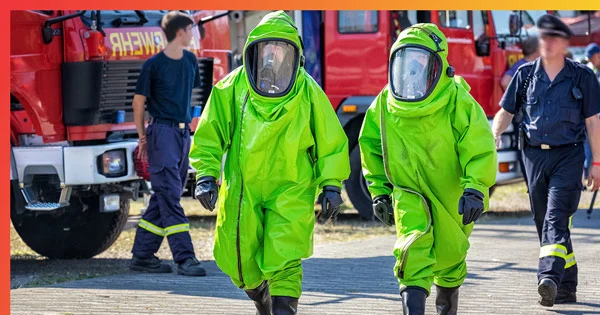
  • Conducting mock scenarios with SCBA’s and encapsulating suits
  • Monitoring devices, manual and electronic

Who Should Attend

Members of management, engineering, maintenance, refrigeration, safety, production, human resources and security. A good cross section can contribute greatly to the overall effectiveness of any emergency response team.

Ammonia Emergency Response Training

3 Day Course Schedule

  1. Hazards That May Confront First Responders
    Health
    Physical
    Routes of Entry
  2. Hazard Communication
    MSDS and Toxicological Terms
    Material Safety Data Sheets
  3. Anhydrous Ammonia
    Health Hazards
    Physiological Effects of Ammonia
    First Aid
    Reactivity of Ammonia
    Fire Hazards of Ammonia
  4. Ammonia Spill Procedures
    Ventilation
    Absorption
    Neutralization
    Reactivity of Ammonia
    Decontamination
  5. Description of an Ammonia Spill and Notification
    Interaction with outside agencies and parties
  6. Respiratory Protection
    Importance
    Areas of Respiratory Hazards
    OSHA Respirator Regulations
    Respirator Types
    Fit testing if necessary
  7. Preparing for an Emergency
    Before, During, After
    Emergency Action/OSHA regulations
    Written Emergency Action Plan
    Exits, Alarms
    Written Fire Prevention Plans

Scenarios are planned that will simulate conditions indicating that a spill or leak has occurred. The personnel will assess the situation and determine what emergency equipment they will need to defensively stop the leak. Critiques will then be held to look for weaknesses or changes that should be made in future scenarios. All personnel will be given the opportunity to wear the air purifying respirators in practice.


At the end of the class the attendees will be required to take an examination and upon satisfactory passing, will be awarded a certificate and a first responder operations level identification wallet card to be used when responding to actual spills.

Emergency Responder Frequently Asked Questions

01 How long is the HAZWOPER 24-hour training good for?

Personnel who have completed the training have the certification or right to respond for one year. At the expiration date of the certificate, the expectation of OSHA is for the personnel to have refresher training.

The OSHA regulation is specific for the HAZWOPER refresher training. The expected and enforced time frame is annual and must be 12 months from the expiration date of the previous training.